

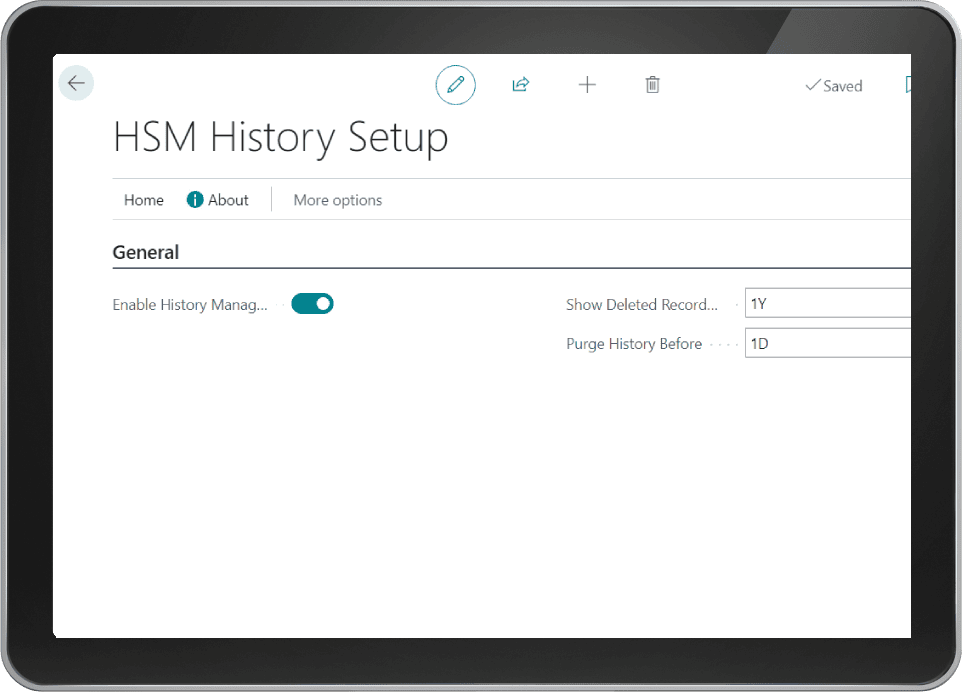
Acumens History Management
The Acumens History Management app introduces advanced tracking of record changes where a complete record copy is created on the corresponding History Table for all types of data modifications. Integrating robust audit trail software mechanisms straight inside Microsoft Dynamics 365 Business Central ensures higher data integrity, regulatory compliance, and complete visibility across enterprise system operations.
Unlike the standard Business Central change log where only differential field entries are captured, this application creates an entire instance of the record whenever a change occurs. This comprehensive historical logging provides back-office administrators, database engineers, and compliance auditors with complete snapshot visibility into historical master records and operational transactions.
Maintaining clear database audit histories prevents unexpected data loss and improves overall organizational transparency across all active departments. When system administrators need to analyze historical system behavior or verify previous record states, having dedicated history tables guarantees that full transactional records remain accessible without risking primary database performance degradation.
Table of Contents
Key Features Included in History Management
Deploying dedicated audit trail software utilities within your ERP infrastructure empowers IT managers to maintain complete governance over critical tables. The app includes three primary core features:
- 1. Change Log: This feature tracks insert, modify, and delete actions on records by storing an instance of the record when a change is made. These records are maintained in tables specific to the record being modified, ensuring optimized access compared to the standard change log.
- 2. Deleted Records: With this feature, you can track all deleted records across your ERP system. It is not specific to a single record but specific to a whole table. For example, all deleted Customer records can easily be accessed directly from the Customer List or Customer Card.
- 3. Raw Data Access: The app gives full access to Change Log raw data for all tables enabled for History tracking. These historical data sets can be extracted from the respective lists and analyzed further for internal security reviews and external regulatory audits.
Optimizing Enterprise Data Governance and Compliance
Relying solely on standard system logs can leave critical gaps during forensic data reviews or compliance audits. Deploying integrated audit trail software protocols ensures that every administrative modification, master record deletion, and field adjustment remains permanently archived on dedicated history tables. This structural security prevents unauthorized data tampering and strengthens internal security policies.
Furthermore, maintaining isolated history tables prevents system performance degradation. Rather than cluttering primary operational ledgers with extensive revision logs, history entries stay organized in dedicated storage structures. This design ensures that daily ERP query speeds remain fast while historical tracking stays fully intact.
Enhancing Database Visibility and Audit Readiness
Modern enterprise environments must comply with strict international data retention standards and corporate governance policies. Embedded audit trail software functions allow compliance managers to track record evolution over time without requesting complex database backups from IT teams. Whether reviewing supplier account updates or tracking deleted ledger entries, full visibility is available instantly.
Centralized history tracking also simplifies external financial audits. Auditors can independently verify data line items, examine user modifications, and inspect raw change logs directly within Business Central, drastically reducing audit preparation time and costs.
Eliminating unverified database revisions safeguards corporate ledgers against unauthorized administrative changes. When historical audit logs generate natively inside Business Central, corporate governance workflows remain completely secure throughout financial reporting cycles. This systemic control protects database reliability and simplifies end-of-year compliance verification for executive leadership teams.
Driving Scalable Database Security
Ultimately, long-term corporate security depends on reliable data tracking systems and transparent revision histories. Deploying comprehensive audit trail software routines inside Business Central allows growing companies to safeguard core data assets while maintaining seamless regulatory compliance for future expansion.
For more details regarding core system configurations, check our guide on Acumens Flexible Document Approvals or read official documentation on Microsoft Dynamics 365 Architecture Models.